Explore Today’s Program
Feb 1, 2026 3:00PM
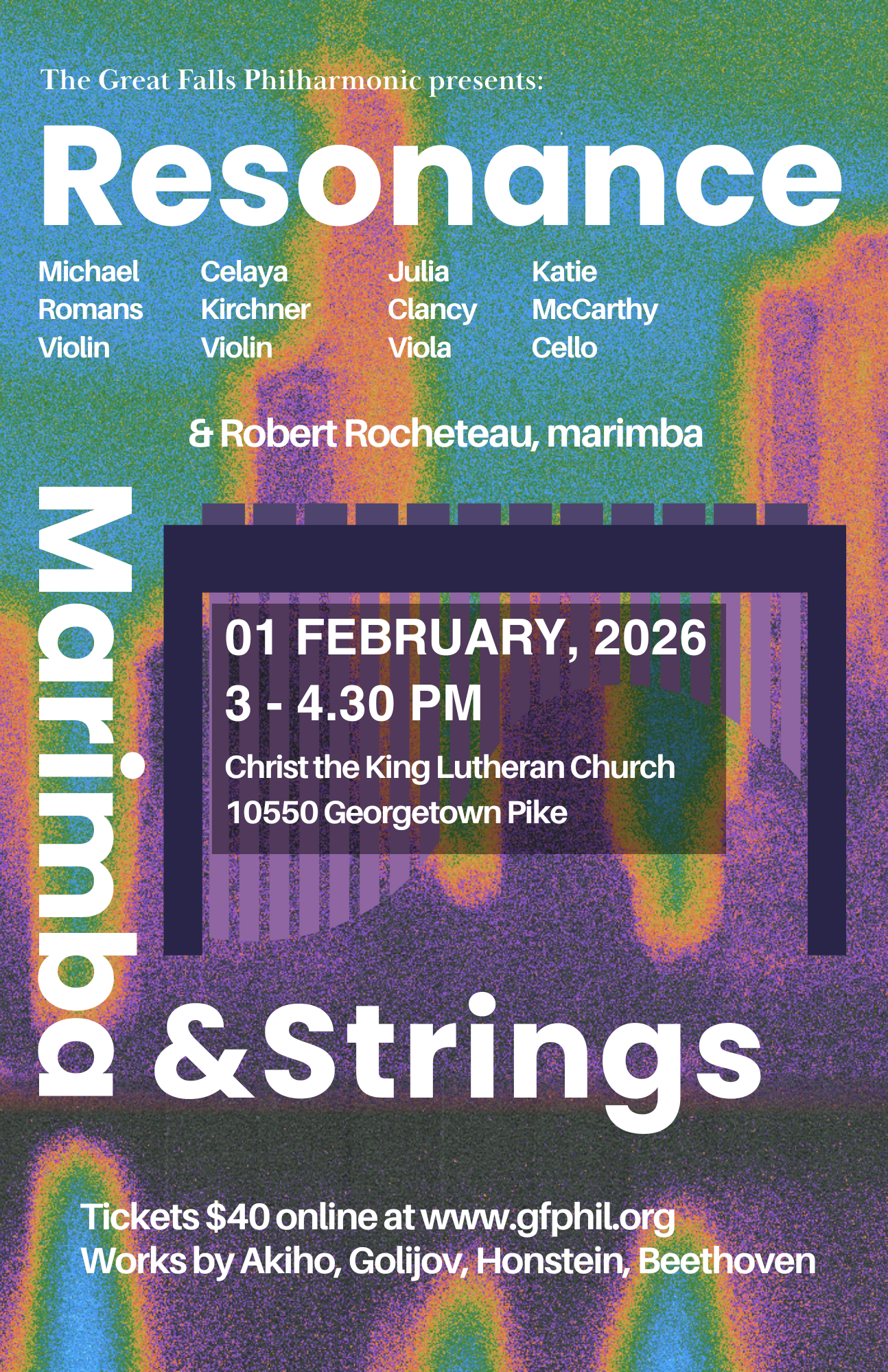
Patter (2009)
for Violin, Cello, and Percussion
Robert Honstein (b. 1980)
Celaya Kirchner, violin
Katie McCarthy, cello
Robert Rocheteau, marimba
A quick succession of light soft tapping sounds: the patter of rain on the rooftops. To move with light, softly audible steps: the patter of little feet around the house. A conversation heard faintly, through the door or the floor: the patter of sisters, friends or neighbors speaking quietly.
Originally a commission from my friend Leanne Zacharias, this piece was written for a tour of West Texas featuring Leanne, violinist Cristina Zacharias and percussionist Ed Reifel. In the winter of 2010 we all joined forces with Christine Fellows and John K. Samson to form the Correction Line Ensemble, presenting a series of concerts in Winnipeg and Brandon, Manitoba. For these shows I revised Patter, and finally I revised it once more for a show at LPR in April 2010. Check out this video by New Morse Code with special guest Katie Hyun, shot by Four Ten Media.
Premiered May 19, 2019 Zed Trio, Sul Ross State University, Alpine, TX.
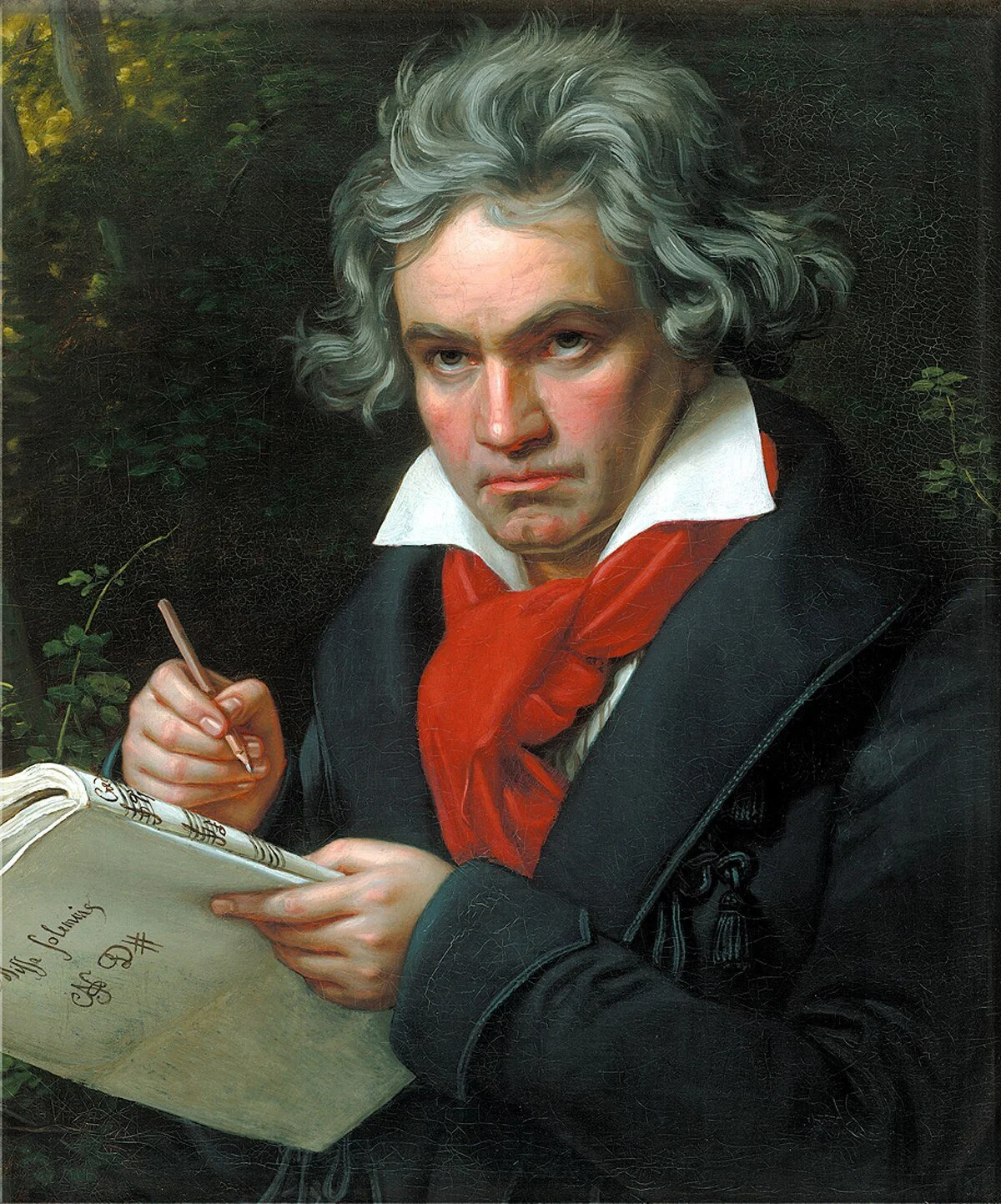
Beethoven applied the term “serioso” to this work with very good reason. The strongly disturbing context of the music emanates from a depth of despair caused by multiple personal anxieties, possibly the most disturbing being the failed love affair he had just experienced. Add to this his worsening deafness, the precarious state of his health, and financial insecurity, and one has a picture of a man in emotional distress. In a letter to a friend, written in May of 1810, the period he was composing the “Serioso” Quartet, he said, “If I had not read somewhere that no one should quit life voluntarily while he could still do something worthwhile, I would have been dead long ago and certainly by my own hand. Oh, life is so beautiful, but for me it is poisoned forever.” (Beethoven had referred to suicide in his famous Heiligenstadt “testament” of 1802, soon after he learned that his deafness was progressive.)
Did Beethoven, a composer of such high moral tone and concern about the brotherhood of man — did he really intend for his distress to be portrayed in a string quartet? No one can know the answer to that question, but one can conclude that his state of mind dictated its emotional essence. The Quartet's opening has the four instruments in unison erupting in one of the composer's most violent statements — just eleven notes, cramped in musical space and intensity. After a pause, the first violin carries on the rage by leaping about wildly in octaves. The first five notes of the opening become a flashpoint throughout the movement — one of Beethoven’s most condensed sonata-form movements — and slashing scale passages in unison confirm the seething atmosphere. In two contrasting themes, the first introduced by viola, the second by violin, there is a semblance of repose, but fury is again ignited in a brief development based on the first theme. At movement’s end, as if exhausted by the stressful activities, the music quiets and fades away.
The not-so-slow second movement — an Allegretto rather than a customary Andante — juxtaposes a songful theme and a second theme that is treated as an extended and enriched fugato. A taut and propulsive Allegro enters from this second movement without a pause. With its dotted rhythms it has an in turn quiet and ferocious intensity, contrasted by a middle section of a hymn-like nature
A slow and expressive introduction makes way for a finale displaying a wide range of temperament. Anxiety and tension are the most prevalent moods, but somewhat surprisingly they are routed at the very end by a sudden surge of major-key good humor that could be construed as evidence of Beethoven’s highly moralistic sense of triumph over adversity. But the exhilarating conclusion may be nothing more than the result of the composer, having tired of all the sturm und drang, simply abandoning the tensions and transcending them. One thoughtful observer wrote of the finale, that “no bottle of champagne was ever uncorked at a better time.”
This isn’t just a business—it’s a reflection of what we believe in. We’re here to create work that matters, led by a shared commitment to quality and care.
Program Notes via Los Angeles Philharmonic
String Quartet No. 11 Op. 95 “Serioso”
Ludwig van Beethoven (1770 - 1827)
Michael Romans, violin
Celaya Kirchner, violin
Julia Clancy, viola
Katie McCarthy, cello
String Duo No. 2 in B-flat Major for Violin and Viola, K.424
Wolfgang Amadeus Mozart (1756-1791)
Michael Romans, violin
Julia Clancy, viola
Duets for violin and viola may seem a rather obscure branch of the chamber music family, but they were quite popular in 18th-century Austria. Joseph Haydn wrote a set of six sonatas for the soprano and alto instruments in 1773, and ten years later the Archbishop of Salzburg - the imperious Hieronymous Colloredo who made Mozart (1756-1791) miserable - ordered Haydn's brother Michael to compose another set of six.
Michael Haydn was able to complete only four of the required six, however, before illness intervened. Misinformed or unconcerned about Haydn's situation, the Archbishop threatened to stop the salary of this distinguished musician who had been in his employ for 20 years. The younger Haydn, a composer who is only beginning to get the recognition and performances he deserves, was much admired by Mozart and a close personal friend. When Mozart heard of his colleague's plight in the summer of 1783, he quickly wrote the two delinquent duos himself and delivered them to the Archbishop under Haydn's name.
Mozart did make some effort to imitate elements of Michael Haydn's style. That is apparent in the bird song trills and grace notes that decorate the opening movement of K. 424, the slow dance form of the middle movement, and the form of the finale, a theme and variations movement of the sort that Joseph Haydn had developed and had used in his own duets.
But this graciously virtuosic piece - like its companion in G major, K. 423 - is unmistakably Mozartean. The chromaticism of the slow introduction to the first movement and the tautly argued development of the ensuing Allegro, the expressive poignancy of the slow movement, which gently rocks in the meter of the old siciliano dance, and the sparkle of the variations all attest to the true identity of the composer, homage to his friend notwithstanding. Mozart played both violin and viola well, and this is - like the Sinfonia concertante, K. 364 - an equal partnership in terms of both musical expression and technical demands.
Program Notes via Los Angeles Philharmonic
Mariel
Osvaldo Golijov (b.1960)
Michael Romans, violin
Celaya Kirchner, violin
Julia Clancy, viola
Katie McCarthy, cello
“I wrote this piece in memory of my friend Mariel Stubrin. I attempted to capture that short instant before grief, in which one learns of the sudden death of a friend who was full of life: a single moment frozen forever in one's memory, and which reverberates through the piece, among the waves and echoes of the Brazilian music that Mariel loved. The work was written for and premiered by Maya Beiser and Steve Schick.”
Program Notes via Osvaldo Golijov
LIgNEouS1
Andy Akiho (b.1979)
Michael Romans, violin
Celaya Kirchner, violin
Julia Clancy, viola
Katie McCarthy, cello
Robert Rocheteau, marimba
In the spring of 2010, I attended an exhibit of composer and architect Iannis Xenakis's original architecture sketches at The Drawing Center in NYC. When I left, I was inspired to sketch out a pitch world with color-penciled "LI - NE- -S" by connecting vertical rows of chromatic pitches, expanding the full range of the 5-octave marimba, with geometric diagonal lines and collapsing triangles. These visually linear note combinations became the foundational scales for the piece. Then, I intuitively worked at the marimba, improvising on these scales, and these improvisations became the fundamental building blocks, or rhythmic and melodic cells, of this work.
"LIgNEouS" means, "made, consisting of, or resembling wood." This title was chosen because the marimba, violin, viola, and cello are all primarily made of wood. Also, the marimbist is often required to play with dowel rod bundles (rutes) and mallet shafts, without typical yarn mallet heads, in order to enhance the extremely wooden sounds and to articulate the highest overtones of the marimba. I also wanted to use industrial timbres in addition to the melodic marimba bars, accomplished through glissandos and strikes to the metallic resonators. To mimic snap (Bartók) pizzicatos, a string technique produced by vertically snapping/plucking a string to rebound off the fingerboard, the marimbist is instructed to snap an extremely large rubber band that is placed on the low D of the 5-octave marimba. Finally, the string parts feature non-pitched scratch tones, a technique adopted from Xenakis's string quartets. The “LIgNEouS Suite” was originally inspired by my amazingly talented friends of the Yale Percussion Group.
- Andy Akiho
Meet Today’s Artists
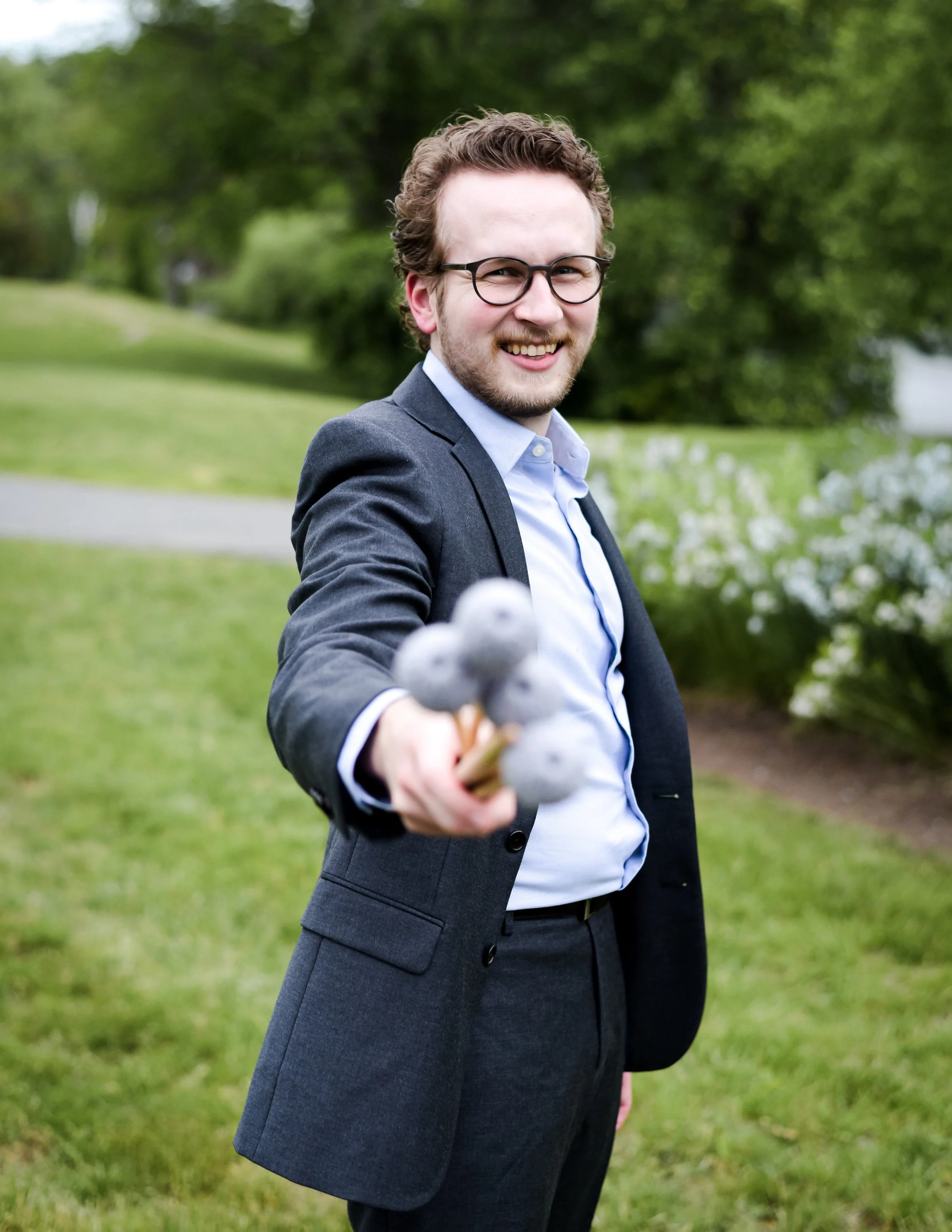
Robert Rocheteau
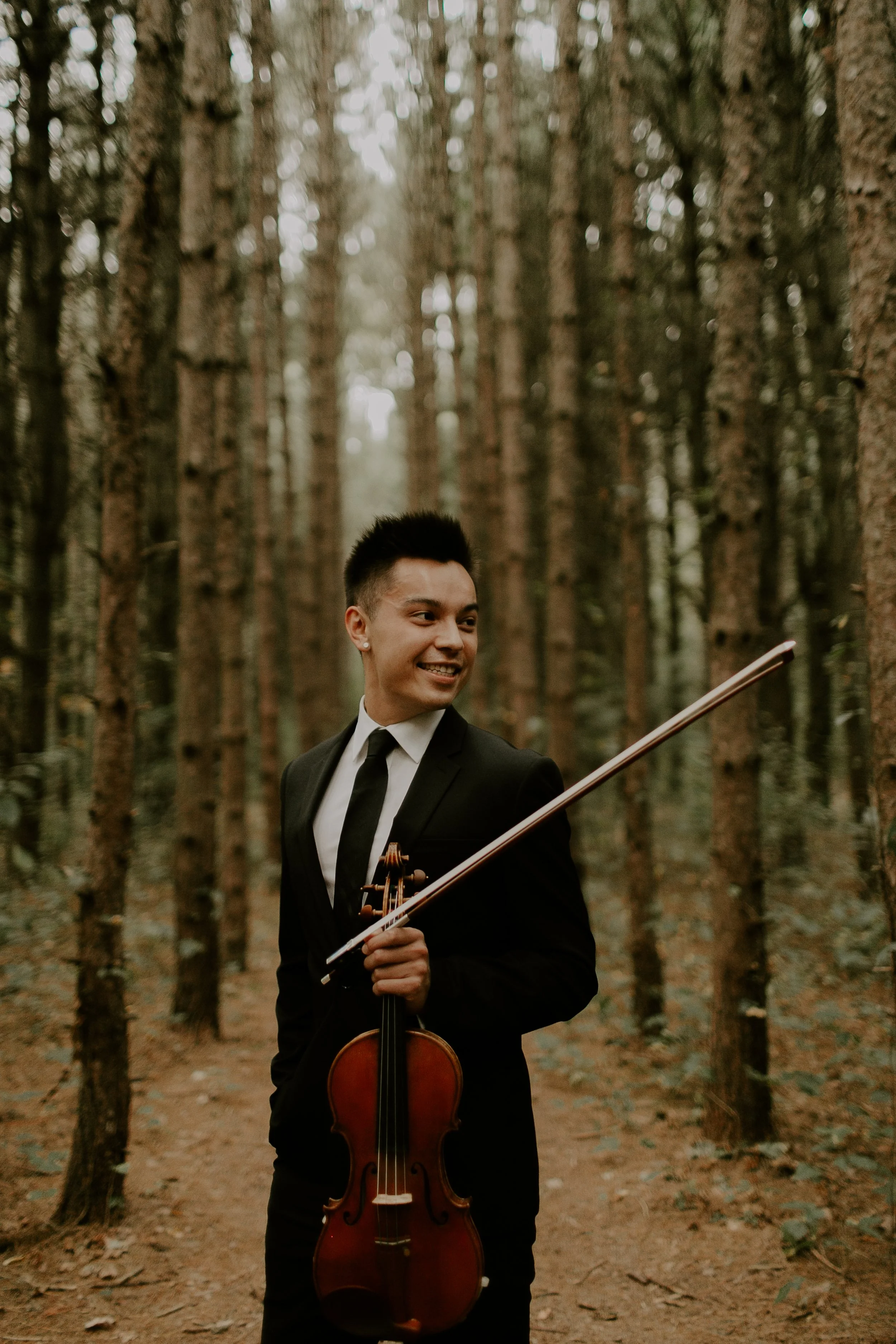
Michael Romans
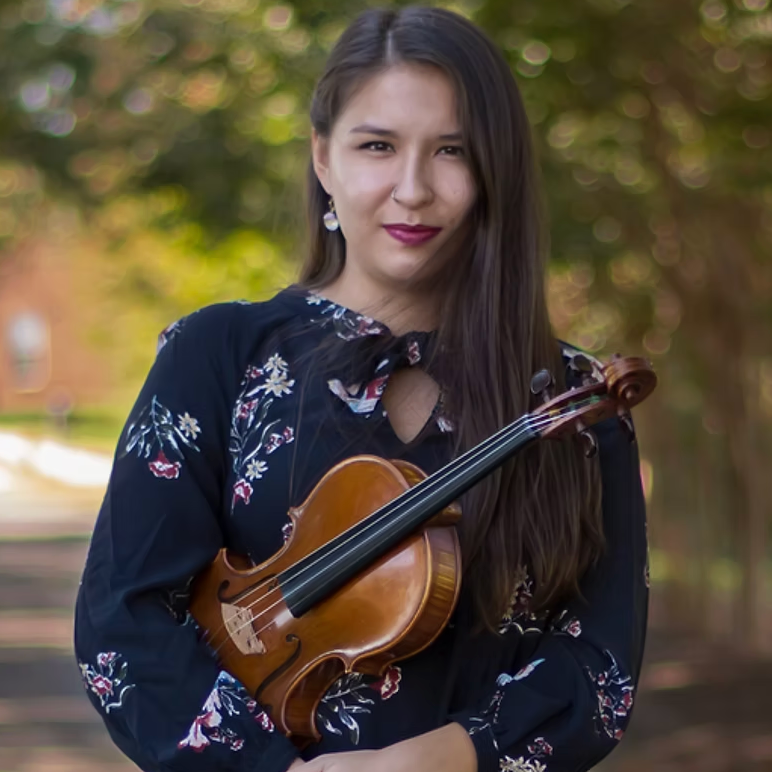
Celaya Kirchner
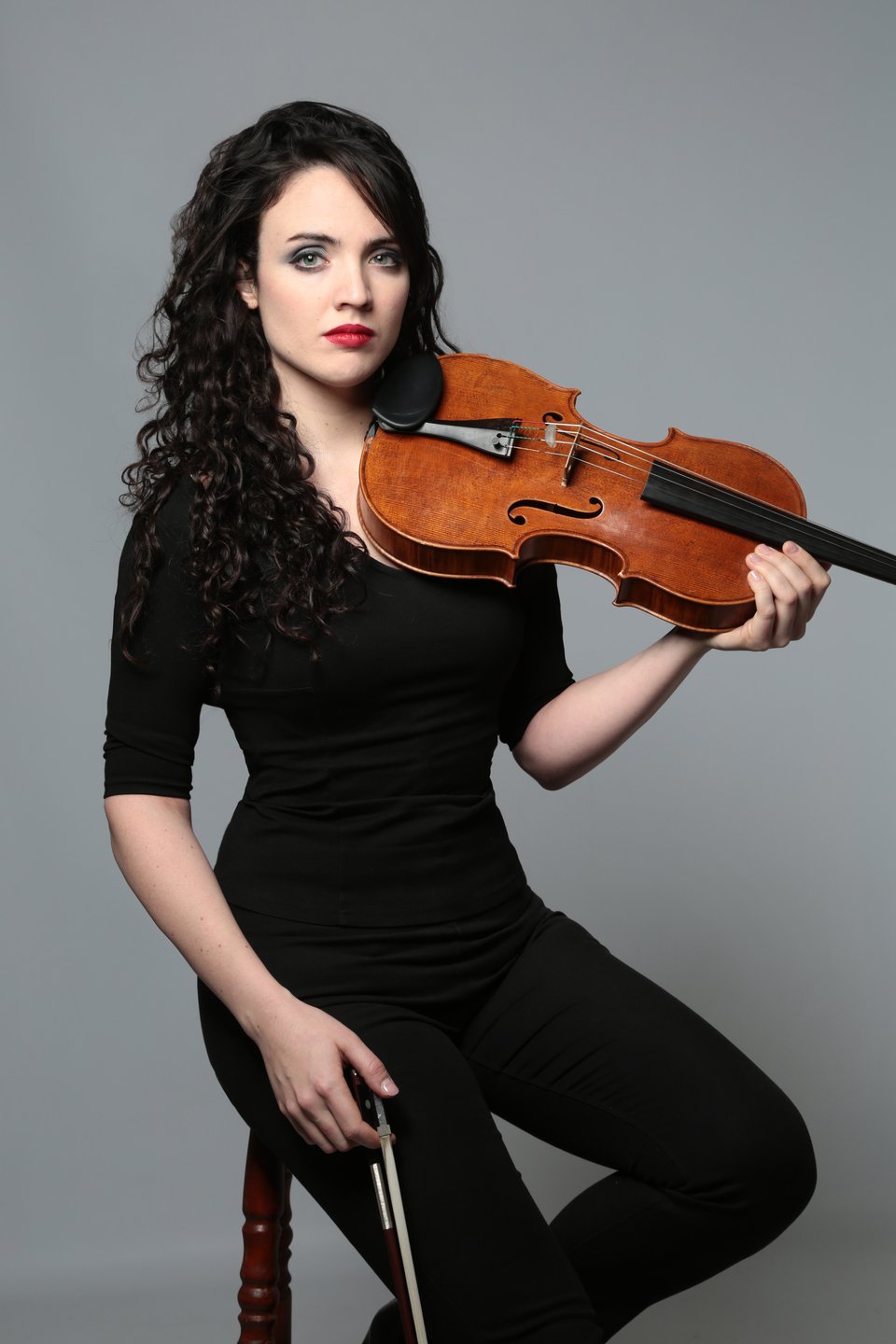
Julia Clancy

Katie McCarthy
Thank you for joining us for the concert!
Please join us after for a brief reception.